
AI Data Center Cooling Solutions
As ultra-high-density computation, AI clusters, Cloud Computing, and High-Performance Computing (HPC) push chip thermal design power (TDP) to its limits, traditional air cooling is no longer sufficient. Liquid Cooling Technology has rapidly become the mission-critical cooling blueprint for next-generation data centers, spanning Direct-to-Chip (D2C) cooling, Cold Plate systems, Coolant Distribution Units (CDUs), Liquid Cooling Manifolds, and Secondary Loops.
In high-flow, 24/7 continuous duty, and high-reliability liquid cooling loops, the tubing components' material integrity, internal surface finish, sealing reliability, and reliable modular design is the key to keeping million-dollar AI servers running around the clock—protecting your investment and maximizing performance.
SANFIT Metal Industry, backed by decades of excellence in sanitary-grade(hygienic) stainless steel fittings and valves, seamlessly extends our 3-A Sanitary design philosophy into the AI data center liquid cooling ecosystem. We provide premium stainless steel components, Tri-Clamp rapid connections, high-performance butterfly valves, ball valves, check valves and sampling valves. We empower liquid cooling OEMs, system integrators (SI), and data center engineering teams to build reliable, easily maintainable, and perfectly consistent fluid networks.
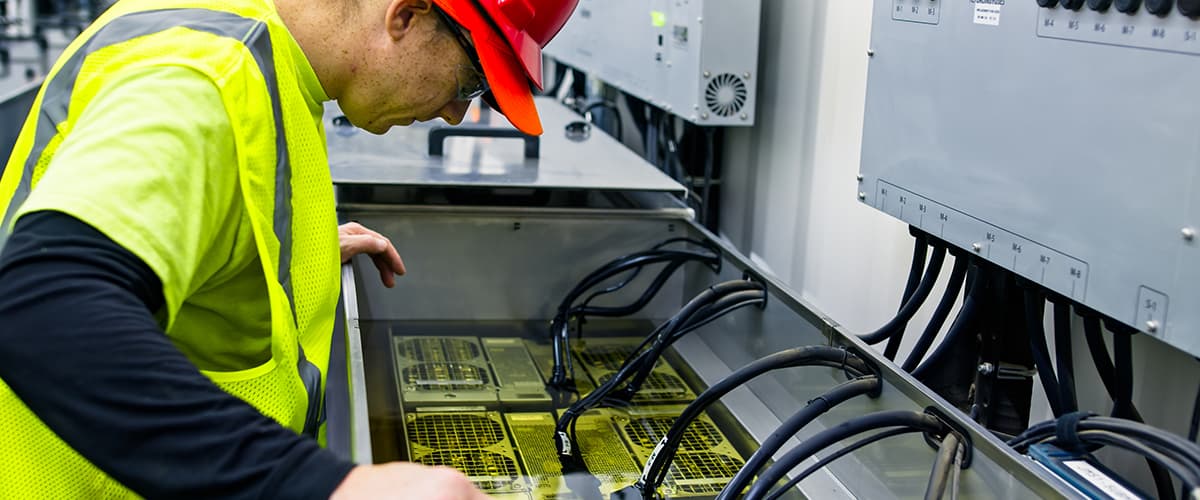
AI Data Center Liquid Cooling Applications
The CDU is the heart of the liquid cooling architecture, regulating coolant distribution, flow rates, heat exchange, and system pressure.
Applicable Products: Small-bore stainless steel fittings, rapid-disconnect fittings, sanitary Tri-Clamp components, precision ball valves, butterfly valves, check valves, sampling valves, and sight glasses / fluid inline indicators.
Data center facility tubing demands robust, high-flow, and maintenance-free operation under continuous pressure.
Applicable Products: Large-diameter stainless steel tubes, tees, elbows, reducers, tube hangers/supports, high-performance stainless steel butterfly valves, and check valves.
The manifold distributes coolant to individual servers, GPUs, or cold plate modules, requiring extreme dimensional accuracy, minimal-leakage, and space-saving layouts.
Applicable Products: Precision instrumentation fittings, adapters, quick-disconnect couplings, and compact small-flow ball valves.
Full Material Test Reports (MTRs), material traceability, and surface roughness certifications available.
Supports custom dimensions, pre-fabricated spool welding integration, and custom prototyping.
Fast-track sampling and reliable, scalable lead times for volume production.
Frequently Asked Questions (FAQ)
No, 3-A Sanitary Standards are originally essential for food, and dairy to ensure ultimate cleanability and inspectability. The key features of 3-A sanitary design, including low dead-leg construction, orbital welding compatibility, and precise dimensional consistency, are highly valuable for reliable AI liquid cooling systems. SANFIT brings its sanitary manufacturing expertise to help keep data center cooling loops clean, reliable, and protected from contamination.
Butterfly valves are well suited for large-diameter primary and secondary cooling loops, as well as main CDU isolation points. Their compact wafer-style design, low operating torque, and light weight can help save installation space and simplify system integration.
Ball valves are ideal for smaller branch lines and applications that require reliable, bubble-tight shutoff. They can also be used at selected flow-control points. SANFIT can help you choose the right valve based on flow rate, pressure drop, available space, and actuator or automation requirements.
Our standard high-purity components feature an internal surface roughness of Ra ≤ 0.8 μm(32 μin). For ultra-stringent requirements (such as advanced semiconductor cooling or specialized dielectric fluids), we can provide enhanced upon request.
Yes. Tri-Clamp connections provide a reliable and flexible solution for CDUs and rack-level liquid cooling equipment. They support fast modular assembly, simplified maintenance, and convenient gasket replacement or inspection. The smooth internal profile helps reduce fluid hold-up areas and supports clean, efficient cooling-loop performance. Before selection, operating pressure, temperature, vibration, and gasket chemical compatibility should be evaluated.
316L possesses exceptional corrosion resistance and orbital welding integrity, making it one of the safest choices for high-spec fluid networks. However, the exact corrosion dynamics of DI water depend on factors like water purity (MOhm resistivity), chloride levels, dissolved oxygen, and operating temperature. We highly recommend sharing your coolant specifications with the SANFIT engineering team during the early design phase so we can provide tailored material certification, passivation, and elastomer (gasket) recommendations.

