
Technical
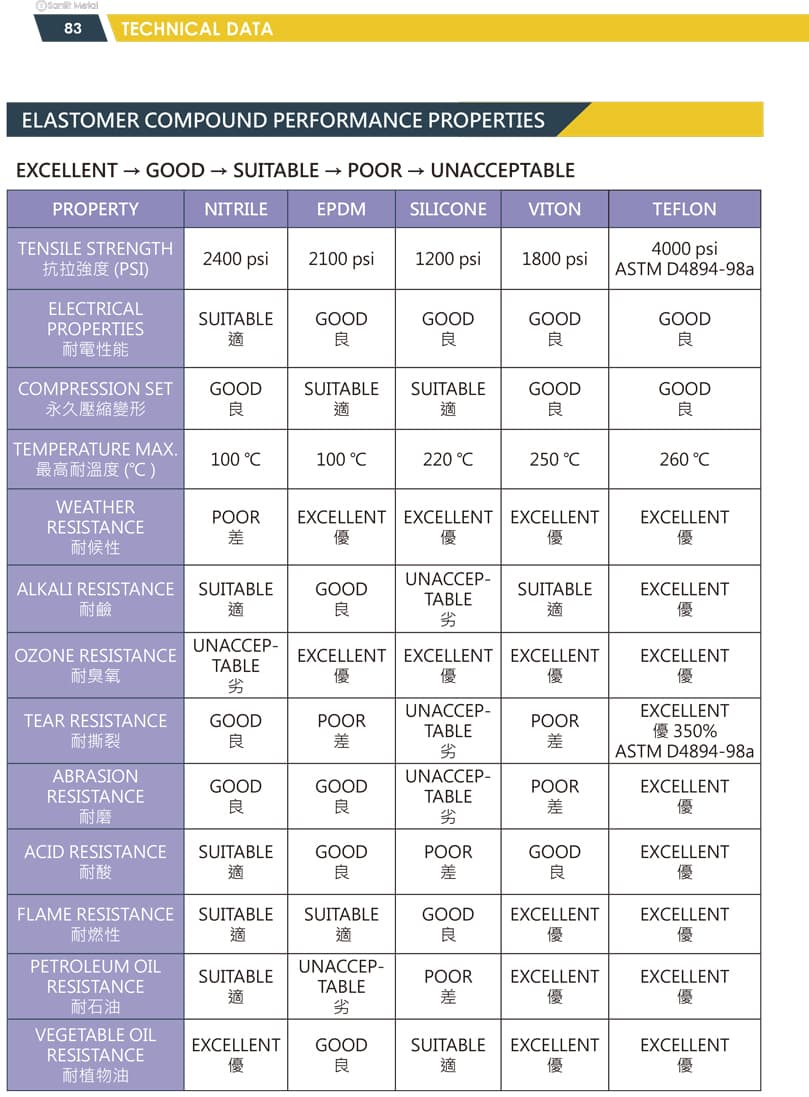
- SANFIT Food grade gaskets material properties table
-
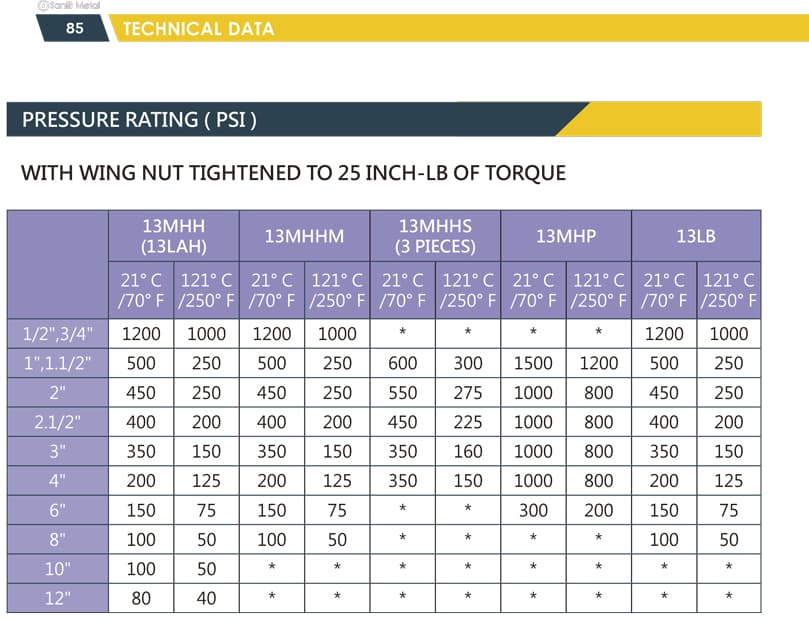
- SANFIT Pressure Rating Of Clamps
-
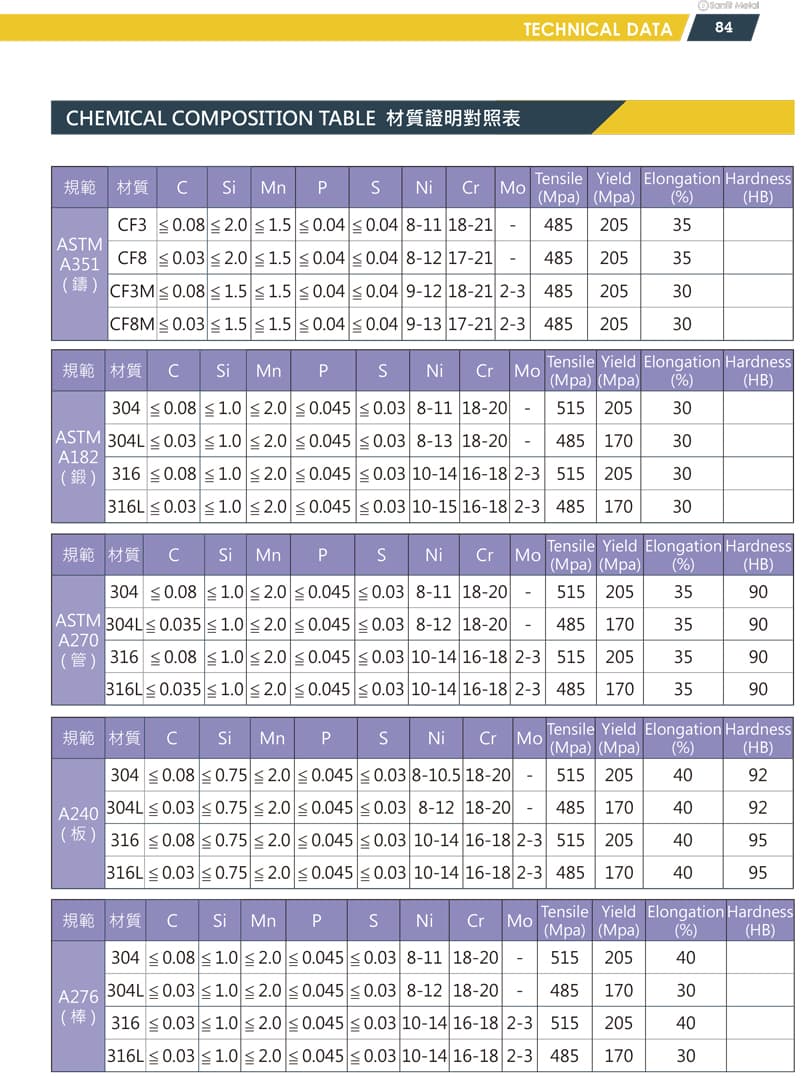
- SANFIT Chemical Composition Table
-
- What Are Sanitary Stainless Steel Fittings?
-
Sanitary stainless steel fittings, also known as hygienic fittings, are tubing components specifically designed for food, beverage, dairy, brewing, and other high-cleanliness processing applications.
Compared with general industrial fittings, sanitary fittings place greater emphasis on the following features:
- Smooth internal surfaces to reduce the risk of product residue and bacterial adhesion
- Hygienic designs that support effective cleaning and drainage
- Compatibility with CIP (Clean-in-Place) cleaning and SIP (Steam-in-Place) sterilization systems
- Food-grade or corrosion-resistant stainless steel materials
- Compatibility with sanitary gaskets, clamps, and valves
- Suitable for processing equipment that requires frequent cleaning, disassembly, inspection, or maintenance
Common sanitary products include:
- Tri-Clamp Fittings
- Ferrules
- Clamps
- Sanitary Gaskets
- Elbows
- Tees
- Reducers
- Union Fittings
- Butterfly Valves
- Ball Valves
- Diaphragm Valves
- Sampling Valves
- Tank Bottom Valves
- Sight Glass Valves
- Y-Type Strainers
- Spray Balls / Cleaning Balls
- What Industries Commonly Use Sanitary Fittings?
-
Sanitary stainless steel fittings and valves are widely used in the following industries:
Industry Typical Applications Dairy Processing Milk, yogurt, butter, whey, and cheese production Food Processing Sauces, jams, edible oils, syrups, seasonings, soups, and semi-liquid foods Beverage Industry Juices, tea beverages, carbonated drinks, functional beverages, and bottled water Brewing Industry Beer, wine, spirits, fermentation liquids, and beverage storage systems AI Liquid Cooling Systems Coolant circulation, liquid cooling distribution tubing, equipment connections, and maintenance systems - What Are the Differences Between 3A, DIN, SMS, IDF, RJT, and ISO Standards?
-
3A, DIN, SMS, IDF, RJT, ISO, and BPE are commonly used standards or specification systems for sanitary tubing applications. However, they may differ in terms of target markets, dimensional systems, connection methods, and sealing designs.
Standard Common Applications or Markets 3A Food, dairy, and beverage industries in the United States DIN Industrial, food, and process equipment in Germany and Europe SMS Food and dairy industries in Scandinavia and Europe IDF Dairy and food processing equipment in the United Kingdom RJT Food, dairy, and brewing equipment in the United Kingdom ISO Internationally used dimensional systems Different standards may vary in outside diameter, wall thickness, sealing surface, thread type, clamp dimensions, and nominal size designation.
Therefore, even if two products are both labeled as “1.5 inch” or “2 inch,” they may not be directly interchangeable.
When requesting a quotation, customers are advised to provide the existing system standard, dimensions, product photos, drawings, or samples to ensure the correct specification.
- What Is a Tri-Clamp Connection and Why Is It Commonly Used in Food Processing Equipment?
-
Tri-Clamp is one of the most common quick-connect systems used in sanitary tubing applications. A standard Tri-Clamp connection usually consists of:
- Two ferrules
- One sanitary gasket
- One clamp
The main advantages of Tri-Clamp connections include:
- Quick assembly and disassembly for easier maintenance
- Convenient cleaning and inspection
- Compatibility with a wide range of fittings, valves, strainers, and processing equipment
- Suitable for food, beverage, dairy, brewing, and hygienic processing applications
- Available in different materials, sizes, and pressure ratings
When selecting Tri-Clamp products, it is recommended to confirm:
- Tubing standard and size
- Ferrule outside diameter
- Gasket material
- Clamp type
- Working pressure and temperature
- Process media
- Required standards, such as 3A, DIN, SMS, ISO, or others
- How Should You Choose Between Tri-Clamp, Union, Weld End, and Threaded Connections?
-
Different connection types are suitable for different processing and equipment requirements.
Connection Type Features Typical Applications Tri-Clamp Quick to assemble and disassemble; easy to clean and maintain Valves, strainers, equipment connections, and areas requiring frequent disassembly Union Fittings Secured with a union nut; removable and stable Tubing systems based on 3A, DIN, SMS, IDF, RJT, and other standards Weld End Permanent connection with stable construction Long-term fixed tubing, tanks, and main process lines Threaded End Convenient installation, but hygienic design must be considered carefully Specific equipment connections or non-high-purity areas If the tubing system requires frequent disassembly, cleaning, or component replacement, Tri-Clamp is usually the most convenient option.
If the system already uses a specific union standard, the matching union fitting should be selected.
For long-term fixed tuing systems, weld-end connections can provide a stable and durable solution.
- What Is the Difference Between SUS 304, SUS 316, and SUS 316L Stainless Steel?
-
SUS 304, SUS 316, and SUS 316L are commonly used stainless steel materials for sanitary products. They offer good corrosion resistance, formability, and weldability.
SUS 304 is the most widely used and cost-effective stainless steel grade. SUS 316 and SUS 316L contain molybdenum, which generally provides improved corrosion resistance, especially in environments with higher salt content, chlorides, acidic media, or frequent CIP cleaning.
Item SUS 304 SUS 316 SUS 316L Main Alloying Elements Chromium, Nickel Chromium, Nickel, Molybdenum Chromium, Nickel, Molybdenum Molybdenum Content None or very low Approx. 2–3% Approx. 2–3% Carbon Content Standard carbon content Standard carbon content Low carbon, typically max. 0.03% Corrosion Resistance Suitable for most general food and beverage applications Better corrosion resistance Better corrosion resistance, especially after welding Welding Applications Depends on welding conditions and post-treatment Suitable Particularly suitable for welded structures Typical Applications Food, beverage, water treatment, and general sanitary tubing Higher-corrosion processing environments Dairy, brewing, and welded sanitary tubing systems - What Are the Main Differences Between 304 and 316L Stainless Steel? What Does “L” Mean?
-
Both 304 and 316L are austenitic stainless steels, but they have different alloy compositions.
SUS 304 mainly contains chromium and nickel. SUS 316L contains chromium, nickel, and approximately 2–3% molybdenum (Mo). Molybdenum improves resistance to chlorides, salt exposure, and certain corrosive environments. For this reason, 316L is commonly used in sanitary processes with higher corrosion risks.
The “L” in 316L stands for Low Carbon.
Standard 316 stainless steel may contain up to approximately 0.08% carbon, while 316L is typically controlled to a maximum carbon content of 0.03%.
The lower carbon content helps reduce the risk of carbide precipitation during welding. This can reduce the possibility of intergranular corrosion near the heat-affected zone of welded areas.
Therefore, 316L is particularly suitable for:
- Welded sanitary tubing systems
- Storage tanks, mixing tanks, fermentation tanks, and reaction vessels
- Equipment requiring long-term CIP cleaning
- Process systems requiring SIP steam sterilization
- Equipment with higher corrosion-resistance requirements at welded joints
- How Does Carbon Content Affect Stainless Steel Properties?
-
Carbon is one of the important elements that affects the strength, weldability, and corrosion resistance of stainless steel.
During welding or exposure to high temperatures, carbon may combine with chromium to form chromium carbides. When chromium is concentrated in carbide formation, the effective chromium content near the welded area may decrease. This can reduce corrosion resistance in that area and increase the risk of intergranular corrosion.
Low-carbon grades, such as 304L and 316L, help reduce this risk. They are particularly suitable for welded tubing, long-term operation, and high-hygiene processing equipment.
However, carbon content is not the only factor to consider when selecting stainless steel materials. Other important factors include:
- Process media, such as water, dairy products, juices, alcoholic beverages, sauces, acids, or alkaline solutions
- Chloride or salt content
- Working temperature and pressure
- CIP chemical type and concentration
- Whether SIP steam sterilization is required
- Whether the system includes welded structures
- Surface roughness and polishing requirements
- Cleaning frequency and maintenance conditions
- What Is the Cost Difference Between 304 and 316L Stainless Steel?
-
In general, SUS 316L is more expensive than SUS 304.
The main reason is that 316L contains higher levels of nickel and molybdenum. Molybdenum is an important alloying element for improving corrosion resistance and also has a significant impact on raw material cost.
The actual price difference between 304 and 316L may be affected by:
- International nickel and molybdenum price fluctuations
- Raw material supply and demand
- Product dimensions, thickness, and weight
- Manufacturing processes, such as polishing, welding, forging, or CNC machining
- Order quantity
- Special packaging, laser marking, or customized machining requirements
316L is not always the best choice for every application.
For general food, beverage, or purified water systems, SUS 304 can usually provide good performance and cost efficiency.
For systems exposed to salt, chlorides, acidic media, higher-concentration cleaning chemicals, or applications requiring improved corrosion resistance after welding, SUS 316L should be considered.
- Does Stainless Steel Never Rust?
-
Stainless steel is not completely rust-proof. Instead, it has a higher level of corrosion resistance than ordinary steel.
Chromium in stainless steel forms a thin and stable passive layer on the surface. This passive layer helps reduce direct contact between the metal and moisture, oxygen, or corrosive media.
However, stainless steel may still develop rust spots, tea staining, pitting corrosion, crevice corrosion, or other corrosion issues if the wrong material is selected, the surface becomes contaminated, or the operating environment is highly corrosive.
Common causes include:
- Long-term exposure to salt, seawater, or chlorides
- Use of chlorine-containing cleaners, bleach, or unsuitable cleaning chemicals
- Surface contamination from iron particles, welding residue, oil, or chemicals
- Liquid accumulation, dead legs, or crevices in the tubing system
- Rough surface finishes that allow contaminants to adhere more easily
- Galvanic corrosion caused by contact between dissimilar metals
- High operating temperatures or highly corrosive environments
- Material grades that are not suitable for the actual process media
In chloride-rich environments, SUS 304 may have a higher risk of pitting corrosion. SUS 316L generally provides better resistance to pitting and crevice corrosion due to its molybdenum content. However, proper cleaning, maintenance, and hygienic tubing design are still essential.
- How Can Corrosion Risks Be Reduced in Sanitary Stainless Steel Products?
-
To extend the service life of sanitary stainless steel fittings, valves, and tubing systems, the following practices are recommended:
- Select the appropriate material based on process media, temperature, cleaning chemicals, and salt or chloride conditions.
- Avoid leaving chlorine-containing cleaners, bleach, or high-salt liquids on stainless steel surfaces for extended periods.
- Clean tubing and equipment regularly to prevent the buildup of food residue, chemical residue, and scale.
- Ensure that welded areas, dead legs, and sealing locations can be effectively cleaned.
- Select suitable internal surface roughness and polishing finishes.
- Avoid contamination from carbon steel tools, iron particles, or other metals.
- Consider SUS 316L for high-corrosion or high-hygiene applications.
- Regularly inspect gaskets, welds, valve sealing surfaces, and tubing connections.
- What Is Surface Roughness Ra and Why Is It Important for Sanitary Products?
-
Ra (Surface Roughness Average) is the most commonly used measurement for measuring the surface roughness of stainless steel. In general, a lower Ra value indicates a smoother surface.
However, the ideal surface finish is not simply the brightest or smoothest possible. Different industries have different requirements based on hygiene, corrosion resistance, cleanability, and process performance. Selecting the appropriate surface finish depends on the specific application and industry standards.
Benefits of a Lower Ra Value
A lower surface roughness generally provides the following advantages:
- Smoother surface finish
- Reduced product residue retention
- Easier cleaning and maintenance
- Lower risk of bacterial adhesion and biofilm formation
- Improved corrosion resistance
Industry Recommended Surface Finish (Ra) Food Processing ≤ 0.8 µm (32 Ra) Beverage Processing ≤ 0.8 µm Dairy Processing ≤ 0.8 µm Brewing Equipment ≤ 0.8 µm Cosmetics 0.4–0.8 µm Biotechnology ≤ 0.38 µm Pharmaceutical ≤ 0.38 µm WFI (Water for Injection) Systems ≤ 0.25 µm Semiconductor Ultra-Pure Water (UPW) Systems ≤ 0.20 µm Actual surface finish requirements should always be confirmed according to customer specifications and applicable industry standards, such as ASME BPE, SEMI, or other project-specific requirements. This is particularly important for pharmaceutical, biotechnology, and semiconductor applications, where specific surface treatments and validation procedures are often required.
For most food, dairy, beverage, and brewery applications, 32 Ra (Ra ≤ 0.8 μm) mechanical polishing is the industry-standard sanitary finish.
SANFIT Surface FinishSANFIT offers a comprehensive range of sanitary stainless steel fittings and valves manufactured to meet the 32 Ra (Ra ≤ 0.8 μm) mechanical polish finish commonly required for food-grade applications. Our products are designed for hygienic processing systems and are widely used in the food, beverage, dairy, and other sanitary industries.
- Can Sanitary Fittings Be Used in CIP Cleaning Systems?
-
CIP stands for Clean-in-Place. It refers to a cleaning method in which the internal surfaces of equipment or tubing are cleaned by circulating cleaning solutions without disassembling the system.
Sanitary fittings, valves, and tubing systems can generally be designed for CIP cleaning. However, cleaning performance depends on the overall system design, including:
- Whether the tubing system contains dead legs
- Whether the system has proper drainage design
- Whether flow velocity and cleaning pressure are sufficient
- Whether cleaning solution concentration and temperature are suitable
- Whether valves and fittings can retain process media
- Whether gaskets, sealing surfaces, and welds are smooth and properly finished
- Whether spray balls are required
A single sanitary component does not guarantee that the entire tubing system is free from cleaning dead zones.
Therefore, tubing layout, valve location, drainage slope, and cleaning procedures should all be considered during the equipment design stage.
- Should Food-Grade Gaskets Be EPDM, Silicone, Viton, or PTFE?
-
Sanitary gaskets are important sealing components in hygienic tubing systems. When selecting a gasket, price should not be the only consideration. The process media, temperature, cleaning chemicals, steam sterilization conditions, and frequency of use should also be evaluated.
Gasket Material Characteristics and Typical Applications EPDM Commonly used in food, beverage, and general sanitary processing. Offers good elasticity and resistance to hot water and steam. Silicone Good flexibility and commonly used in food, biotechnology, and high-cleanliness applications. Viton / FKM Offers good chemical resistance and high-temperature resistance. Suitable for specific chemicals or higher-temperature conditions. PTFE Excellent chemical resistance and suitable for more corrosive media. Sealing performance and installation conditions should be carefully evaluated. When requesting a quotation, customers are advised to provide:
- Process media
- Working temperature and pressure
- Whether CIP or SIP is used
- Fluid type and concentration
- Tubing standard and size
- Whether material certificates, or special colors are required
- How Should You Choose Between Butterfly Valves, Ball Valves, Diaphragm Valves, and Divert Valves?
-
Different valve types are suitable for different fluid control requirements.
Valve Type Main Function Features Butterfly Valve On/off control Simple structure, easy to disassemble, and cost-effective Ball Valve Shut-off, switching, and flow diversion Available in two-way, three-way, manual, and pneumatic designs Diaphragm Valve High-hygiene or special process control Helps reduce contact between process media and actuator components Divert Valve Flow diversion, mixing, and tubing switching Suitable for automated multi-line processing systems Sampling Valve Product sampling Allows quality inspection without interrupting the main process Tank Bottom Valve Tank bottom discharge Suitable for storage tanks, mixing tanks, fermentation tanks, and reaction vessels Sight Glass Valve Visual process monitoring Allows observation of flow, color, clarity, and bubbles Y-Type Strainer Filtration of particles Protects downstream valves, pumps, and instruments Before selecting a valve, it is recommended to confirm the process media, viscosity, pressure, temperature, flow rate, cleaning method, automation requirements, and connection standard.
- What Is the Difference Between Manual Valves and Pneumatic Valves?
-
The main difference between manual valves and pneumatic valves is the control method.
Type Features Typical Applications Manual Valve Operated directly by personnel; simple structure and lower cost Low-frequency operation, small equipment, and budget-sensitive systems Pneumatic Valve Controlled by compressed air and can be integrated with automation systems Automated production lines, CIP systems, frequent switching, or remote-control applications When selecting a pneumatic valve, the following should also be confirmed:
- Available air supply pressure
- Normally open or normally closed configuration
- Single-acting or double-acting actuator
- Whether a solenoid valve is required
- How Should You Choose Between Concentric and Eccentric Reducers?
-
Reducers are used to connect tubes with different diameters.
Type Features Typical Applications Concentric Reducer Centerlines are aligned Commonly used for vertical tubing or general flow reduction Eccentric Reducer One side is flat Commonly used for horizontal tubing to help prevent liquid accumulation or air pockets In sanitary processing systems, the installation direction of an eccentric reducer should be determined according to flow direction, drainage requirements, and tubing layout to reduce the risk of liquid accumulation, air pockets, and cleaning dead zones.

